Anyone who knows me even a little understands what a huge Potterhead I am. I’m obsessed with Harry Potter and the magical world J.K. Rowling created. So, when the opportunity arose to plan our trip to the UK, I leapt at it and tailored our entire itinerary around Harry Potter attractions. Rishi was certainly surprised by how many Harry Potter-themed stops I managed to include.
London
As we strolled through London, we came across Leicester Square, a lively centre for entertainment and film premieres, showcasing a Harry Potter statue as part of the “Scenes in the Square” trail. This bronze statue depicts a young Harry Potter on his Nimbus 2000 broomstick, recreating a scene from “Harry Potter and the Philosopher’s Stone.” With his robes billowing as if mid-flight, the statue captures the magical spirit of the series, serving as a nostalgic spot for fans like me. This tribute to the iconic film franchise adds a touch of enchantment to the bustling square.

We then walked past Cecil Court, a charming, pedestrian-only street near Leicester Square. Often cited as an inspiration for Diagon Alley in the series, Cecil Court exudes old-world charm with its narrow passageway and Victorian-era shopfronts. Lined with antiquarian bookstores, rare map dealers, and speciality shops, it feels like stepping back in time. The colourful facades and timeless atmosphere evoke the magical vibe of Diagon Alley, where witches and wizards shop for supplies. Even in our brief visit, the street’s vibrant energy and eclectic mix of shops made it easy to imagine Harry Potter buying his schoolbooks or wizards exchanging secrets there.


As a Harry Potter fan in London, discovering the telephone booth entrance to the Ministry of Magic was a thrilling moment that blurred the line between the wizarding world and reality. Spotting the classic red phone box, seemingly ordinary yet brimming with magical potential, filled me with excitement. I imagined stepping inside, dialling “62442”—the secret code for “magic”—and the booth descending smoothly into the heart of the Ministry, just as it did for Harry, Ron, and Hermione. This everyday piece of London transforms into a gateway to enchantment.

We returned to our Harry Potter adventure after exploring a few famous spots in London. After a bit of searching, we found Bedfordbury, a narrow and shadowy alley near Covent Garden that seems straight out of the Harry Potter books. There was no doubt it might have inspired Knockturn Alley, the infamous haunt of dark wizards, as it was dimly lit and had aged brick walls and hidden corners. In contrast to the busy streets nearby, the alley felt eerily still. The street was lined with old-fashioned shops and weathered signs, reminiscent of the mysterious shops where Harry and his friends encountered the darker side of magic.


As we walked toward the metro station to head back to our accommodation, I noticed the striking banners and signage outside the Palace Theatre, featuring the Harry Potter and the Cursed Child logo—a golden nest with wings cradling a young boy against the theatre’s iconic red-brick facade. I had read the published script and wasn’t a fan of the story, as it contradicted many elements established in the main book series. However, I’ve heard great things about the play and its magical effects on stage. Despite not loving the book, I couldn’t resist snapping photos of anything related to Harry Potter.


The next morning, we arrived at King’s Cross station via metro, eagerly searching for the platform. Spotting the platform numbers, my excitement grew. Visiting King’s Cross as a Harry Potter fan was a nostalgic thrill. The highlight was Platform 9 ¾, where a luggage trolley seems to be halfway through the wall, just like in the books. Fans, many dressed in Hogwarts gear, including a boy in full Harry Potter attire, lined up for photos as if heading to the Hogwarts Express. I wore my Hogwarts Express T-shirt, and they provided scarves to complete the look. An official photographer was there, but since we got a good shot on our phone, we didn’t buy the store’s photos. The shop next to the platform was packed with wands, robes, and other magical items, creating a Diagon Alley-like atmosphere. We picked up a few keychains and magnets as souvenirs.


As we exited King’s Cross, we were greeted by the grand sight of St. Pancras Station, with its towering clock tower and Victorian architecture. This is where Harry and Ron, in Harry Potter and the Chamber of Secrets, famously take off in the flying Ford Anglia after missing the Hogwarts Express. The station’s dramatic, Gothic facade was the perfect backdrop for the unforgettable scene where the car soars into the sky. Standing outside, I could easily imagine the moment it swooped past the towering windows.


We crossed the Millennium Bridge, a sleek, modern structure spanning the Thames. In Harry Potter and the Half-Blood Prince, this bridge becomes a symbol of chaos, twisting and collapsing under the dark magic of the Death Eaters. As a Harry Potter fan, walking across it in real life was surreal. The contrast between its serene design and its cinematic destruction was striking. The Millennium Bridge, though intact and peaceful, carries with it the memory of one of the most dramatic sequences in the Harry Potter films.


After exploring other parts of London, we ended our day with a visit to Claremont Square, a quiet spot with Georgian townhouses surrounding a central green. This unassuming square served as the exterior for 12 Grimmauld Place, the secret headquarters of the Order of the Phoenix in the Harry Potter films. In the wizarding world, 12 Grimmauld Place is hidden between numbers 11 and 13, invisible to Muggles. Standing there, it was easy to imagine the house appearing out of nowhere, its dark facade blending into the traditional London homes. The square’s peaceful vibe contrasts with the secrecy and tension of its magical counterpart, making it a subtle yet iconic stop.


Cotswold
On our way to Bath and the Cotswolds, I decided to stop at Lacock Village, a picturesque spot with cobblestone streets and charming medieval buildings that feel straight out of a storybook. Several scenes from the Harry Potter films were shot here, making it a must-visit for a fan like me. One highlight was visiting the house that served as Horace Slughorn’s hideaway in Harry Potter and the Half-Blood Prince. Nestled in the heart of the village, this quaint cottage, known as Burleigh Babberton, was where Dumbledore and Harry tracked down Slughorn.


Durham
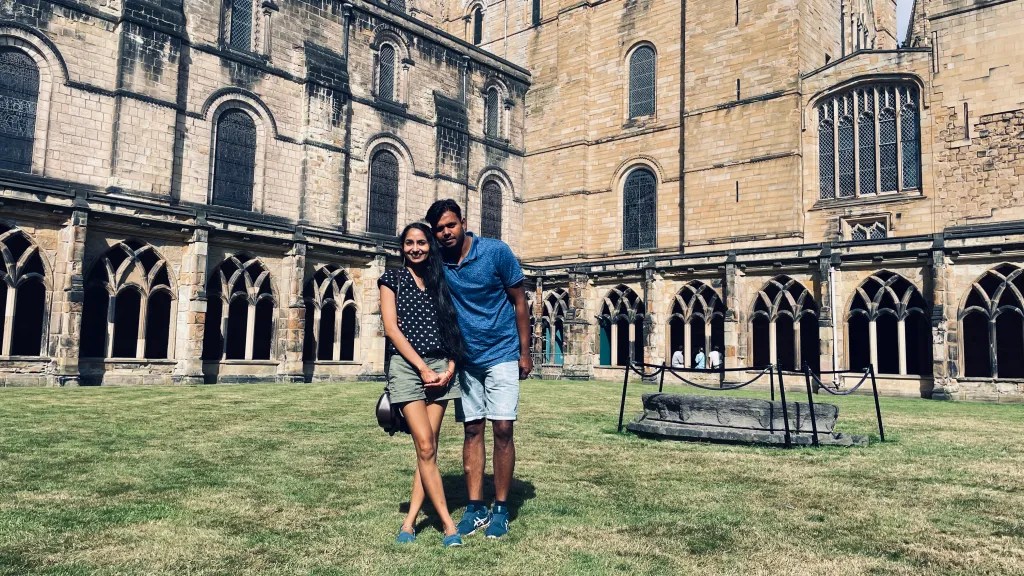
On our drive to Edinburgh, we stopped at Durham Cathedral, an awe-inspiring site with its towering Romanesque architecture and rich history. For Harry Potter fans, it’s even more special as a filming location for Hogwarts in the first two films. The cathedral’s cloisters, with their medieval arches and serene atmosphere, were used for scenes like Harry’s first encounter with Hedwig and McGonagall’s Transfiguration lessons. Walking through the ancient corridors, I could easily picture Hogwarts students roaming the halls. We took pictures from every angle and even sat on the grass, soaking in the magical ambience—it truly felt like stepping into Hogwarts.




Scotland
I found a free walking tour called the Potter Trail in Edinburgh and couldn’t resist booking a slot. The experience was nothing short of magical. As a Harry Potter fan, visiting the places that inspired J.K. Rowling brought the wizarding world to life in a way that connected me deeply to the series. We started at Greyfriars Kirkyard, a centuries-old graveyard in the city’s heart. Rowling would often look out at Greyfriars from the Elephant House Café, where she drafted the early books, and wander through its historic tombstones for inspiration. It was here she found names that would later enter the series, such as “Thomas Riddell,” whose tombstone influenced Voldemort’s Muggle name, Tom Riddle.
The grave of Thomas Riddell, a 19th-century Scottish gentleman and military figure, has become a pilgrimage spot for fans. While there’s no link between the real Riddell family and the fictional dark wizard, seeing his weathered tombstone felt like a glimpse into Rowling’s creative process. Nearby, the grave of William McGonagall, a famously bad Scottish poet, also left its mark. His notorious verses and “poet” title may have influenced Professor McGonagall’s character.
From the graveyard, we glimpsed George Heriot’s School through its gates, a building with four towers that may have inspired Hogwarts and its houses. We continued past Edinburgh University, where Rowling studied for her postgraduate certificate, and the Elephant House Café, where she spent hours writing. Victoria Street, our next stop, with its colourful, winding lane of quirky shops, unmistakably served as the model for Diagon Alley. Along the way, we visited a Harry Potter shop where I bought a book and had it stamped, and a tweed shop that was once a joke shop, still bearing oversized glasses and a nose on its sign—a likely inspiration for Weasleys’ Wizard Wheezes. The Potter Trail was not just an adventure into a fictional world but also a journey into the inspirations that shaped it, making it one of the most memorable highlights of my time in Edinburgh.


We visited the Glenfinnan Viaduct to catch a glimpse of the iconic Jacobite train crossing the sweeping archway. Known as the “Hogwarts Express” in the films, the train’s journey over the viaduct is one of the most magical moments in the series, where it whisks students away to Hogwarts. Standing at the lookout, the scenic view of the train curving gracefully along the 21 arches of the viaduct was breathtaking, with the lush, rolling hills of the Scottish Highlands framing the scene perfectly. As the train approached, a cheer went up from the crowd of onlookers, all eagerly capturing photos and reliving a piece of the wizarding world in real life. The experience of seeing this iconic moment brought to life in such a stunning setting made the long-awaited visit to Glenfinnan truly magical.


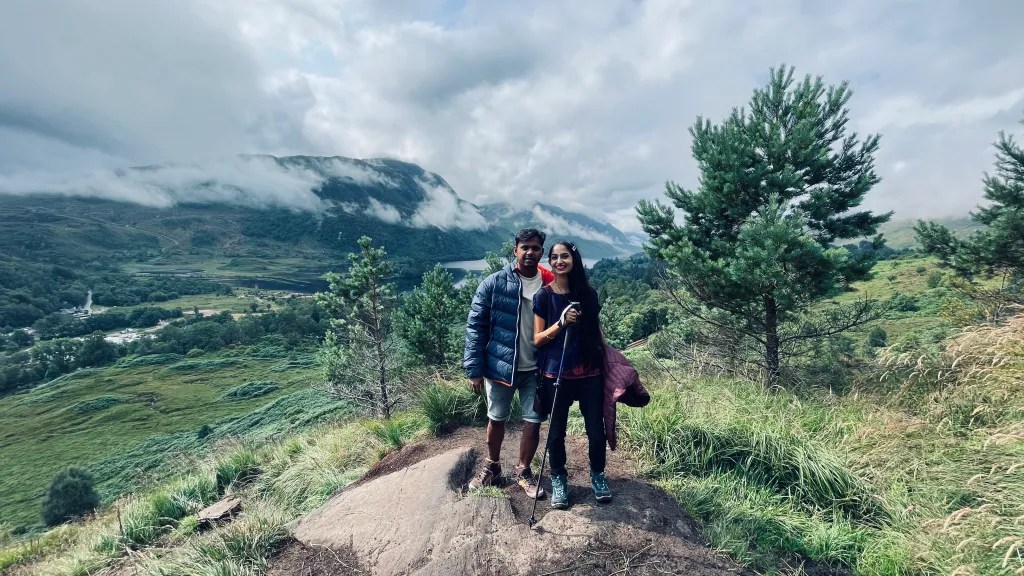
After watching the Jacobite train cross the Glenfinnan Viaduct, we hiked up to get a view of Loch Shiel—a breathtaking, expansive lake that served as the backdrop for Hogwarts in the Harry Potter films. Loch Shiel, with its tranquil waters and rugged highland landscape, is where Harry and his friends see Buckbeak flying in The Prisoner of Azkaban, and it’s also the lake that surrounds Hogwarts. Standing there, gazing out over the loch, I could imagine the students gliding across its surface in enchanted boats or catching sight of magical creatures. The view from above was captivating, with the lake stretching out against the dramatic mountains and misty sky, bringing a quiet, mystical feeling to the moment.




Oxford
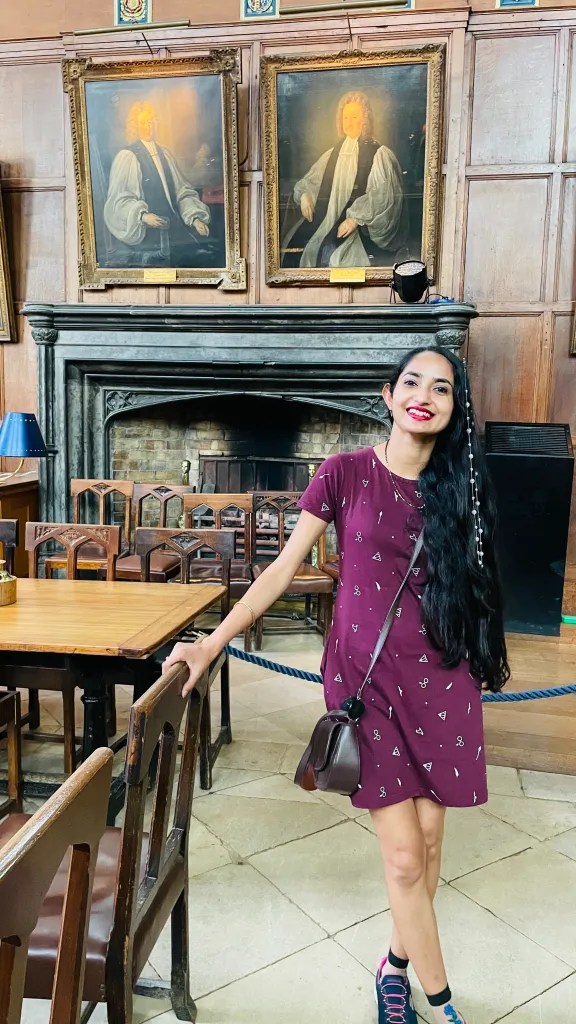
Just before closing, we stepped into the Divinity School at Oxford, a hall that truly felt like Hogwarts. This grand medieval space, with its vaulted ceilings and intricate stonework, served as the Hogwarts Infirmary in Harry Potter and the Philosopher’s Stone and other iconic scenes. The hall’s serene atmosphere and soft evening light made it easy to imagine Madam Pomfrey tending to students in need of magical remedies. It was also the setting where Professor McGonagall gave Ron his memorable, slightly awkward dance lesson before the Yule Ball in Goblet of Fire. The enchanting ambience was the perfect start to our Potter-themed visit to Oxford.


The next morning, we visited Christ Church in Oxford, home to the iconic Great Hall and staircase. The staircase, with its grand, sweeping stone steps, is where Professor McGonagall first welcomes the young wizards to Hogwarts in Harry Potter and the Philosopher’s Stone. As we walked up the steps, it felt as if we were about to be sorted ourselves! Inside the Great Hall, with its long wooden tables, high ceiling, and stunning stained glass, it was easy to imagine the Hogwarts students gathered here for their feasts. Although the real hall at Christ Church is slightly smaller than the enchanted version in the films, its medieval ambience and stately architecture make it feel every bit as magical. Wandering these halls, we felt transported into the wizarding world, experiencing a bit of Hogwarts in real life.




Warner Bros. Studio Tour
We spent half the day at the Warner Bros. Studio Tour in London, an unforgettable conclusion to our Harry Potter-themed UK adventure. From the moment we entered, we were immersed in the magic of the films, surrounded by authentic sets, costumes, and props that brought the wizarding world to life.


We couldn’t resist taking pictures and videos at every turn, from the iconic Great Hall to the Gryffindor Common Room, Dumbledore’s office, and the Forbidden Forest. Walking through Diagon Alley was especially magical. The cobblestone street, lined with crooked, colourful shopfronts like Ollivanders, Weasleys’ Wizard Wheezes, and Borgin and Burkes, felt alive, as if witches and wizards might appear at any moment. Every detail, from the enchanting window displays to the twisting architecture, transported us straight into the heart of the wizarding world.




Our excitement was so high that before we even reached the midway point, one of our phones died, and we regretted forgetting the power bank. Thankfully, we had a backup phone to keep capturing the magic!
One of the most jaw-dropping moments was stepping into the mesmerising Gringotts Bank. Its gleaming marble columns, opulent chandeliers, and goblin mannequins recreated the grandeur of the wizarding world’s most iconic bank. Even more striking was the destroyed version of Gringotts from Deathly Hallows: Part 2, with shattered columns and the haunting aftermath of the dragon escape.


The studio’s staff added so much depth to the experience, sharing fascinating stories behind the scenes. For instance, I learned that Voldemort’s gown was designed in seven shades of green to represent his Horcruxes, with the colours gradually fading as each Horcrux was destroyed. We also discovered how prosthetics brought goblins to life, how Hagrid’s towering size was achieved, and the painstaking animation that created Dobby. One particularly funny fact was that the actor who voiced Aragog was so terrified of spiders that he refused to enter the Forbidden Forest set!
The Hogwarts Castle model was another unforgettable highlight. Its intricate detail and soft lighting gave it an enchanting, dreamlike quality. Boarding the Hogwarts Express at Platform 9 ¾ was equally magical, sparking memories of Harry’s first journey to Hogwarts.


By the end of the tour, we picked up our pre-booked souvenir guidebook at the gift shop, a perfect memento of the day. This visit wasn’t just a trip through the films; it was a journey into the creativity, artistry, and storytelling that brought Harry Potter’s world to life. For a fan like me, it was the ultimate experience—a day of pure magic we’ll always treasure.

Very well written Limi. This time I read it thoroughly because it’s from England so I thought I should know these places as living here for 25 years. I haven’t visited lots of places and it really transported me to Harry Potter films . You got a very good storytelling capability. beautiful in every way..
Very nice explanation. Each details are connecting me with Harry potter films and insisting to re-watch the movie.
You are a very nice writer and really big fan of Harry Potter.
Keep writing.
Inspired me to start writing.
God bless you.