This visit wasn’t really planned. We initially went to SBI Antwerp for some banking matters, but since we had already driven two hours to Belgium, we decided to check out Ghent—the only major Belgian city I hadn’t visited yet but had heard great things about. With the day off, we figured we’d drive the additional 30-40 minutes to reach Ghent.

Day 1 – 16 July 2024
Since the trip was spontaneous, I quickly googled things to see in Ghent on the way. When we arrived, we parked near the city center and wandered around. Rishi, having visited before, also took me to some of his favorite spots from his previous trip.

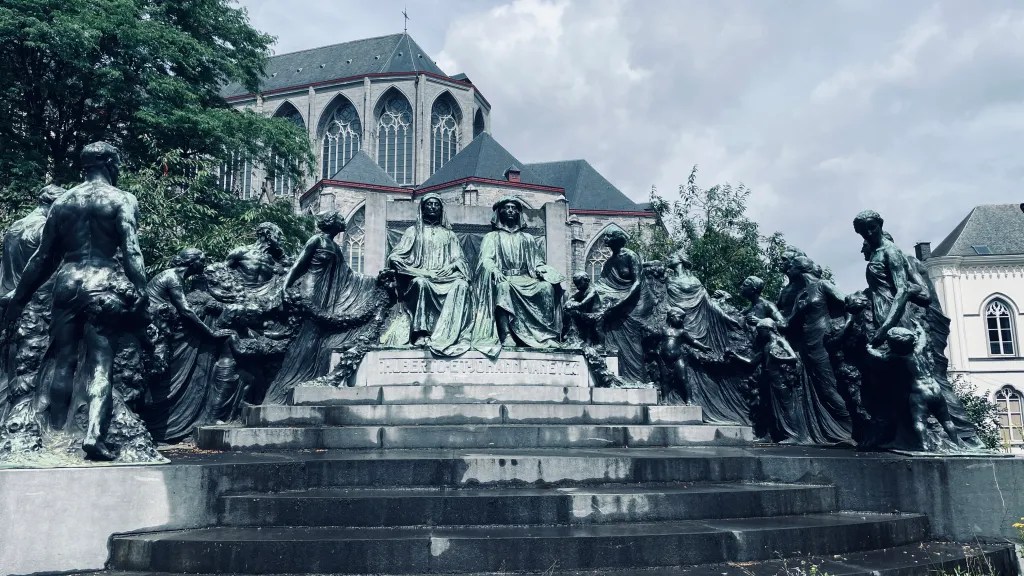


Our first stop was St. Michielsbrug, or St. Michael’s Bridge, one of Ghent’s most picturesque spots with panoramic views of the city. This stone arch bridge spans the Leie River and offered a perfect vantage point to admire Ghent’s iconic landmarks. The bridge, adorned with ornate street lamps and iron railings, exuded historic charm. Below, the tranquil river reflected the architecture of Graslei and Korenlei streets, lined with medieval guild houses. From the bridge, we could see the impressive trio of medieval towers—the St. Nicholas Church, the Belfry of Ghent, and St. Bavo’s Cathedral.
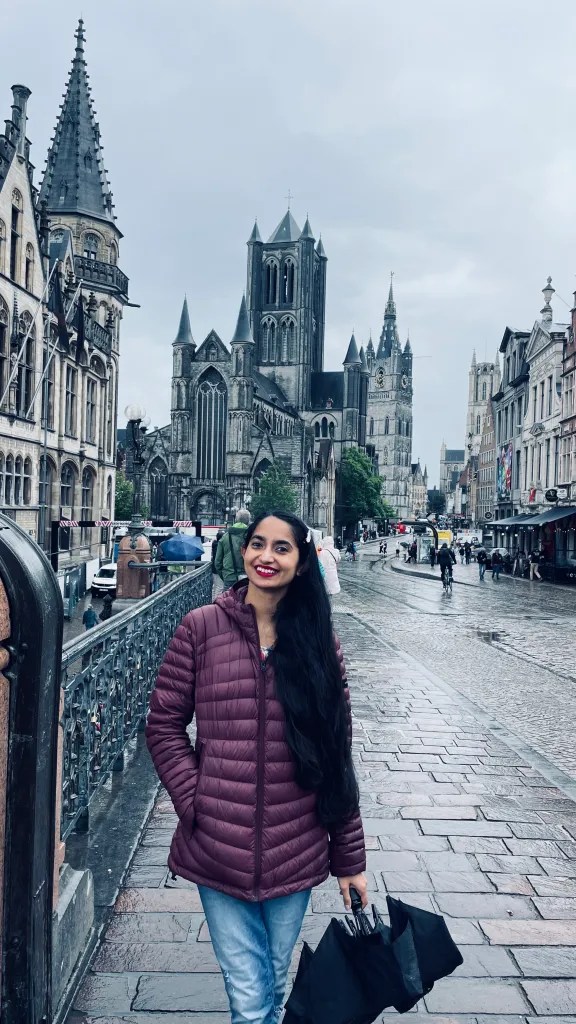
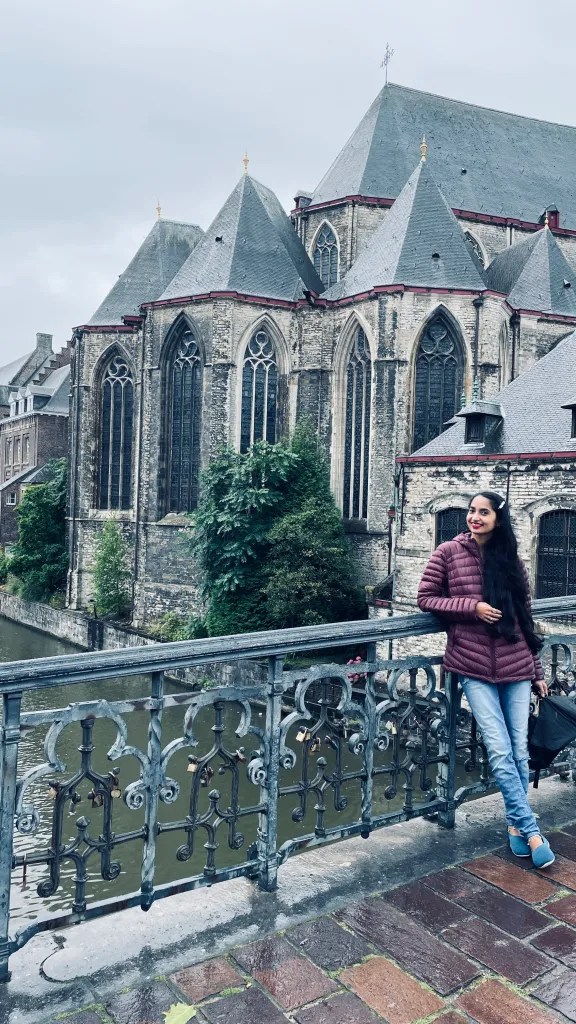
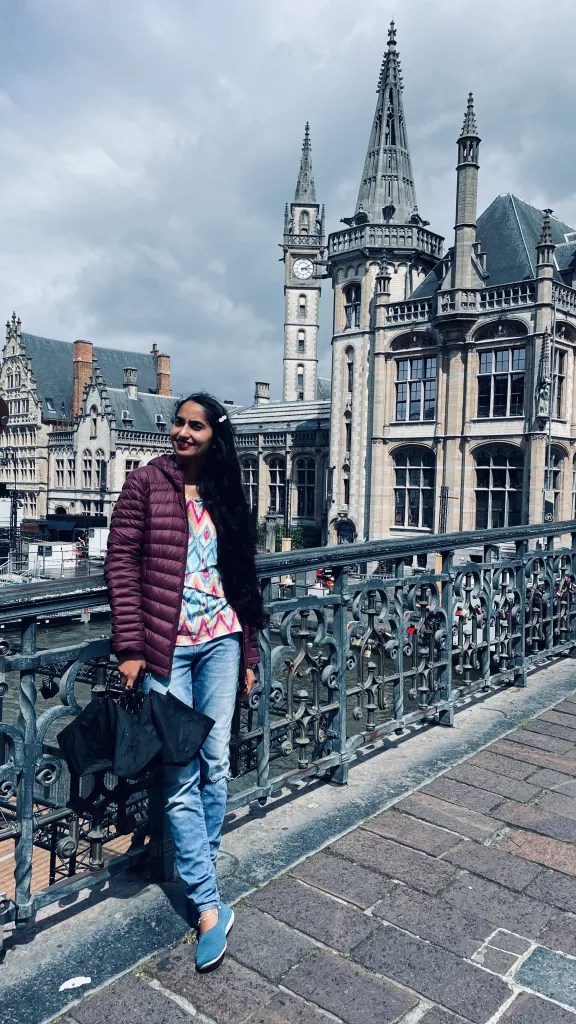
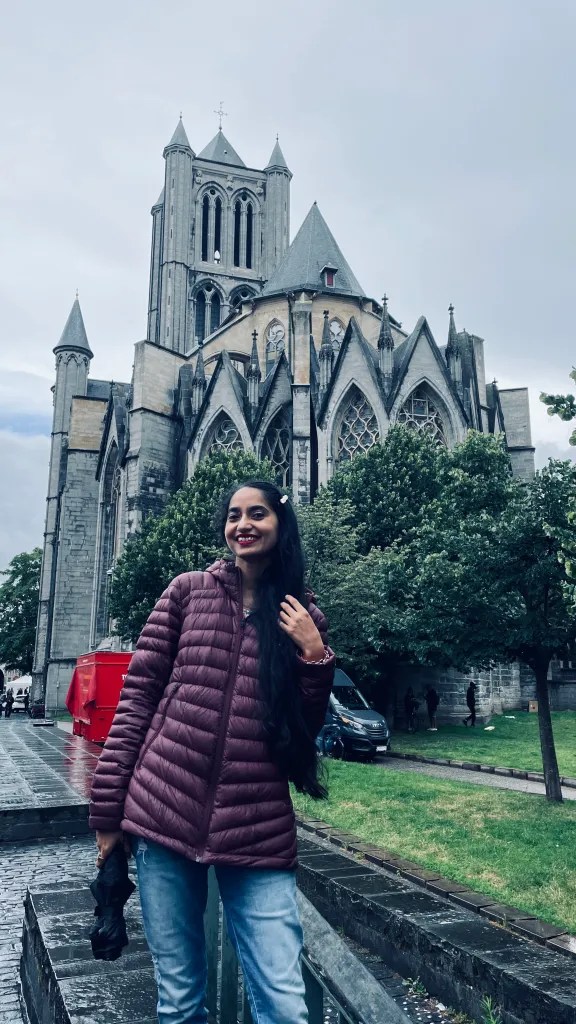
Next, we visited St. Nicholas Church, the first church we spotted. Built in the 13th century, its blue-gray stone facade, pointed arches, and tall windows showcase the Scheldt Gothic style unique to the region. The church’s central tower dominates the skyline. Inside, the soaring vaulted ceilings, intricate stained glass windows, and a grand 19th-century organ create a stunning atmosphere, with tall columns and ornate altars lining the nave.


We then walked past the Belfort, or Belfry of Ghent, a towering medieval structure symbolizing the city’s independence and history. Standing at 91 meters tall, it’s the tallest belfry in Belgium and a UNESCO World Heritage site. Built in the 14th century, it features a mix of Gothic and Romanesque styles, with a stone facade, pointed arches, and a gilded dragon weathervane at the top. The Belfry once housed the town’s bells and served as a watchtower. We considered going inside, but since it involved climbing a lot of stairs, we decided to move on.


Next, we visited the third building we had seen from the bridge, St. Bavo’s Cathedral. Originally dating back to the 10th century, it was largely rebuilt in the Gothic style between the 14th and 16th centuries. The cathedral is famous for its architectural grandeur and artistic treasures. Its exterior boasts a towering spire, intricate stone carvings, and large stained glass windows depicting biblical scenes. Inside, the soaring vaulted ceilings, marble columns, and richly decorated nave are equally impressive, with the cathedral filled with religious art, including altars, sculptures, and tapestries.


We then visited Graffitistraatje, officially known as Werregarenstraat, a vibrant alley dedicated entirely to street art and graffiti. Unlike most parts of the city, where graffiti is discouraged, this narrow street is a free space for artists to express themselves. As a result, its walls are covered in colorful, intricate, and often thought-provoking artwork, ranging from detailed murals to spontaneous sketches and political statements. The alley is a canvas for both established artists and anyone who wants to contribute, making it a symbol of creative freedom in the city. Some of the graffiti was so intricate and amazing that we had to stop and admire it.


Our next stop was Castle Gravensteen, a stunning 12th-century medieval fortress. Built by Count Philip of Alsace as a symbol of power, its name translates to “Castle of the Counts.” One of the best-preserved medieval castles in Europe, it offers a fascinating glimpse into the region’s history. The imposing structure is surrounded by a moat and features thick stone walls, crenelated towers, and a large central keep, blending Romanesque and Gothic architectural styles. We admired the castle from the outside and took a walk around it.


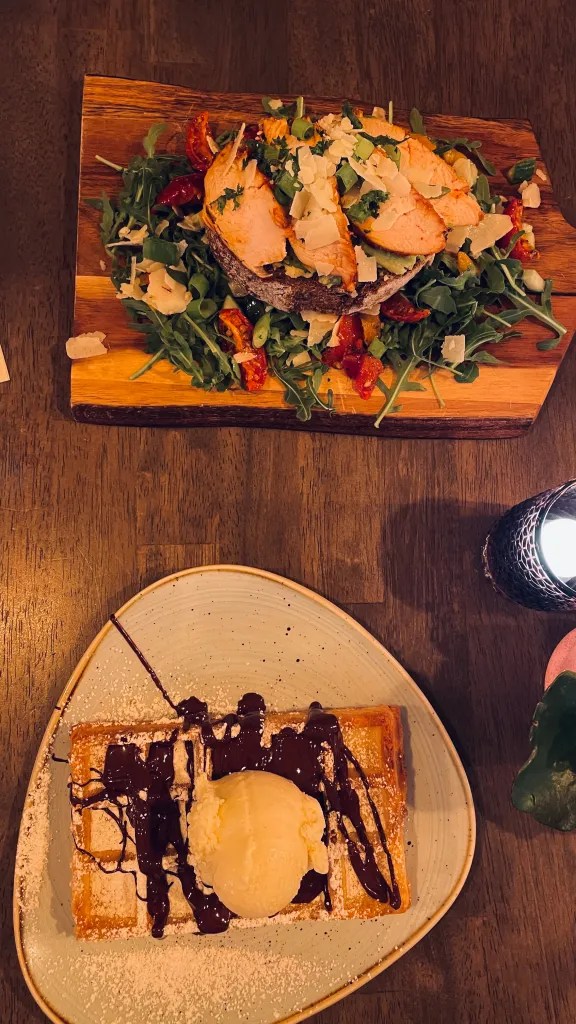
By then, hunger had set in, leading us to a restaurant called In Choc for lunch. We ordered a chicken dish and a waffle. While the chicken was quite bland, the waffle was delicious. This experience taught us that in Belgium, it’s best to stick to what they excel at: waffles, fries, and chocolates. We shouldn’t make the mistake of trying other dishes and expecting them to be good.


Rishi then took me to his favorite spot in the city, Graslei. This iconic riverfront street offers a postcard-perfect view of historic facades along the serene Lys River. Graslei, situated in the heart of Ghent, is known for its stunning medieval architecture, with beautifully preserved guild houses dating back to the Middle Ages. Each building boasts a unique facade, showcasing the wealth and significance of the guilds and merchants who built them. We relaxed by the riverbank for a while, soaking in the scenic views of the water and the surrounding architecture.

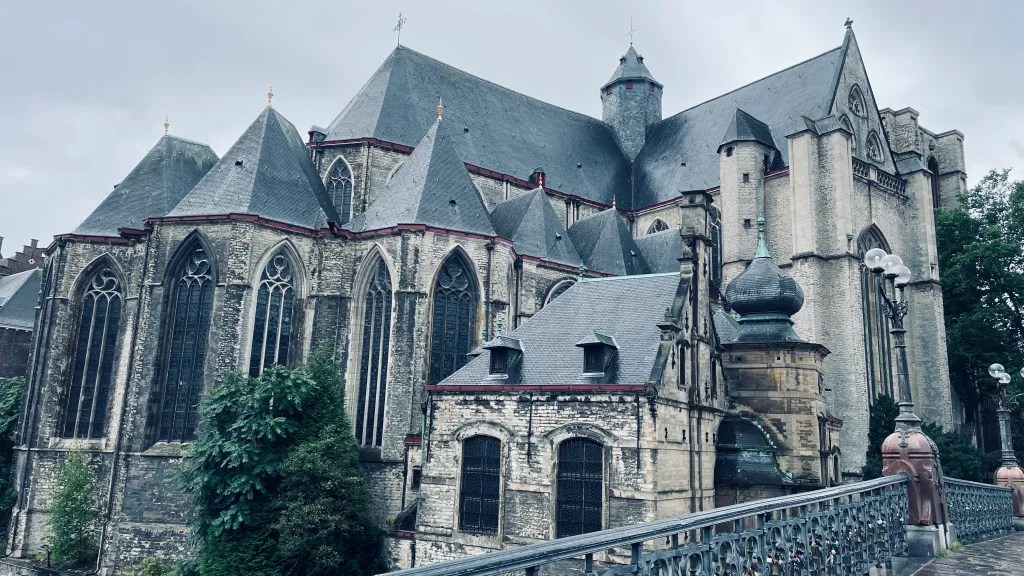
Finally, we visited St. Michael’s Church, an impressive Gothic structure we had spotted across St. Michael’s Bridge. Built between the 13th and 15th centuries, the church is notable for its towering spire and intricate façade with pointed arches and detailed sculptures. Inside, the soaring vaulted ceilings and spacious aisles create a grand atmosphere, complemented by beautiful stained glass windows and ornate altars that showcase its rich artistic heritage.


Although our visit was unplanned and brief, I was still impressed by the city’s vibrant atmosphere.

Very nice 😊