We organised this trip with the intention of bringing my parents to Switzerland. Since we had already been to Switzerland the year before with Rishi’s parents, we aimed to discover similar yet different locations we had visited before. This way, the experience would be fresh and exciting for all of us.
Day 1 – 27 May 2023
In the morning, we embarked on our journey towards Switzerland. Along the way, we made a planned stop at Trier, where we took the opportunity to explore the town.

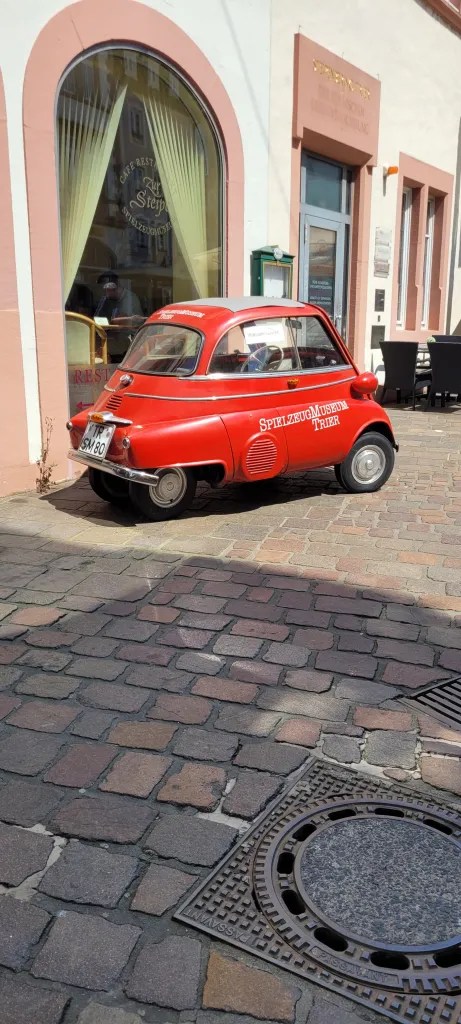


We walked past the Dreikönigenhaus, a Romanesque and Gothic patrician house dating back to 1230 that stands out with its white colour and vibrant patterns adorning the semi-circular windows. During that era, security was a primary concern for wealthy families, which is why the house was designed more like a fortified tower. Notably, the front door of the Dreikönigenhaus is positioned a few metres above the street level, indicating that the residents would have used a ladder to access or leave the house.


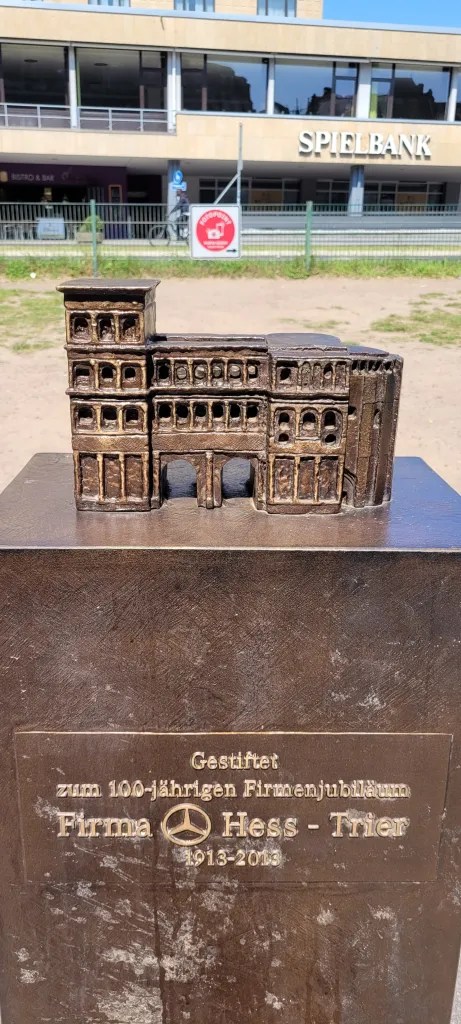
Arriving at Trier’s most renowned monument, we encountered Porta Nigra, an ancient Roman city gate. This well-preserved structure is among the finest examples of Roman gates globally and has earned recognition as a UNESCO World Heritage Site. The name “Porta Nigra,” meaning “Black Gate” in Latin, originates from the gate’s dark-coloured stone. Constructed during the 2nd century AD, it once served as an entrance to the Roman city of Augusta Treverorum (Trier).




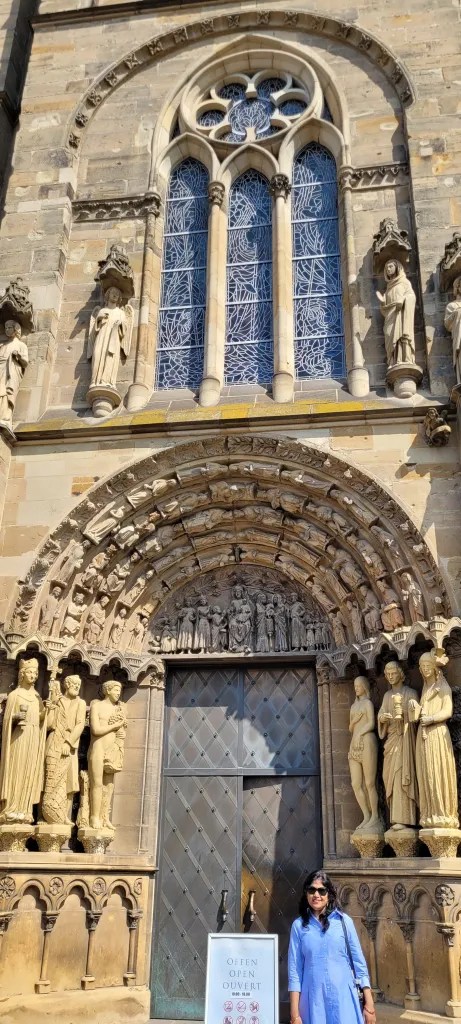
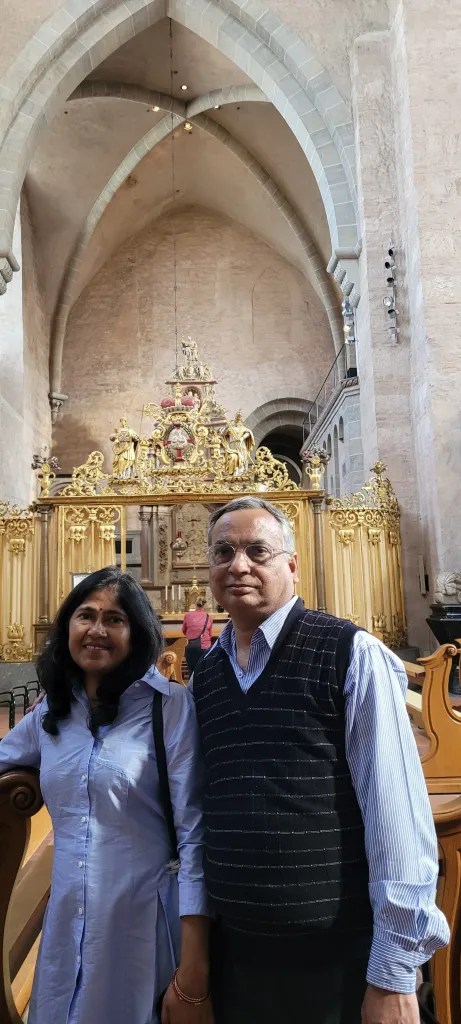
Afterwards, we strolled to the Cathedral of Trier, also referred to as Trierer Dom, renowned as one of Germany’s oldest cathedrals. Its origins can be traced back to the 4th century AD, and it presents an exquisite fusion of Romanesque, Gothic, and Baroque architectural elements. As a UNESCO World Heritage Site, the cathedral holds great importance as both a religious centre and a historical monument.






We then strolled to the Electoral Palace Gardens, a splendid and extensive garden situated adjacent to the Electoral Palace. These gardens are renowned for their tranquil atmosphere and vibrant array of flowers. While strolling through the gardens, we found a shaded area beneath a tree where we ate our packed lunch.


Following that, we made our way to Karl Marx House, the birthplace of the esteemed philosopher, economist, and political theorist, Karl Marx. The house has been transformed into a museum that commemorates and displays the life and achievements of Marx. Unfortunately, due to time constraints, we were unable to explore the museum’s interior during our visit.


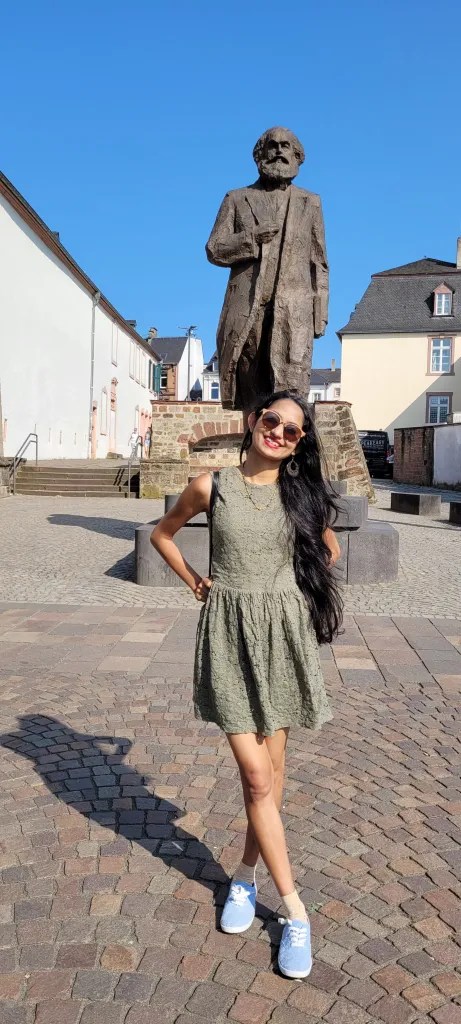
Our final destination was the Karl Marx Statue, a notable monument erected in honour of the esteemed philosopher, Karl Marx. Positioned prominently in a central area of the city, the statue serves as a tribute to his profound ideas and significant contributions. The sculpture captures Karl Marx in a dignified pose, symbolising his enduring intellectual legacy.


Following a lengthy drive, we eventually arrived at our overnight lodging, Ferienwohnung ALEXA, situated in Walshausen. This generously sized apartment, complete with a balcony offering garden views, boasts one bedroom, a cosy living room, a flat-screen TV, a fully equipped kitchen with a dishwasher and oven, as well as a bathroom with a walk-in shower. The apartment truly impressed us and we found ourselves thoroughly enjoying it. However, we couldn’t help but wonder why our stay was so brief, as we wished we had more time to relish the comforts of this delightful accommodation.
Day 2 – 28 May 2023
After preparing ourselves, having breakfast, and completing the check-out process at the apartment, we set out on our journey to Switzerland. By afternoon, we had finally arrived at our destination.
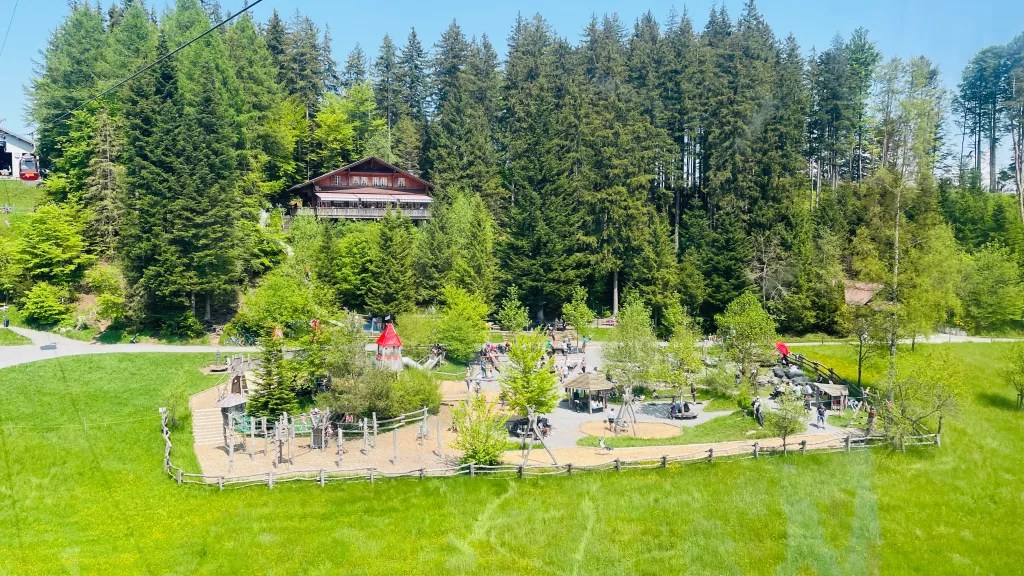
Our first destination was Mount Pilatus, a magnificent mountain situated near Lucerne. The mountain offers breathtaking panoramic views of the surrounding landscapes, including the picturesque Lake Lucerne and the Swiss Alps. We chose to visit Mount Pilatus as it had a similar view to Mount Rigi, which we had explored on our previous trip. To reach the summit, we took a cable car since the cogwheel railway was undergoing maintenance. The cable car ride provided a thrilling and scenic ascent. Once at the top, we found outdoor seating areas where we enjoyed our packed lunch while taking in the natural beauty that surrounded us. After lunch, we ventured out to explore various walking trails and relished the stunning views from several viewing platforms. Some of the trails were easy enough for Mummy and Papa to explore, while Rishi and I decided to tackle a few more challenging paths. The effort was truly rewarding, as the views from the higher vantage points were absolutely breathtaking.



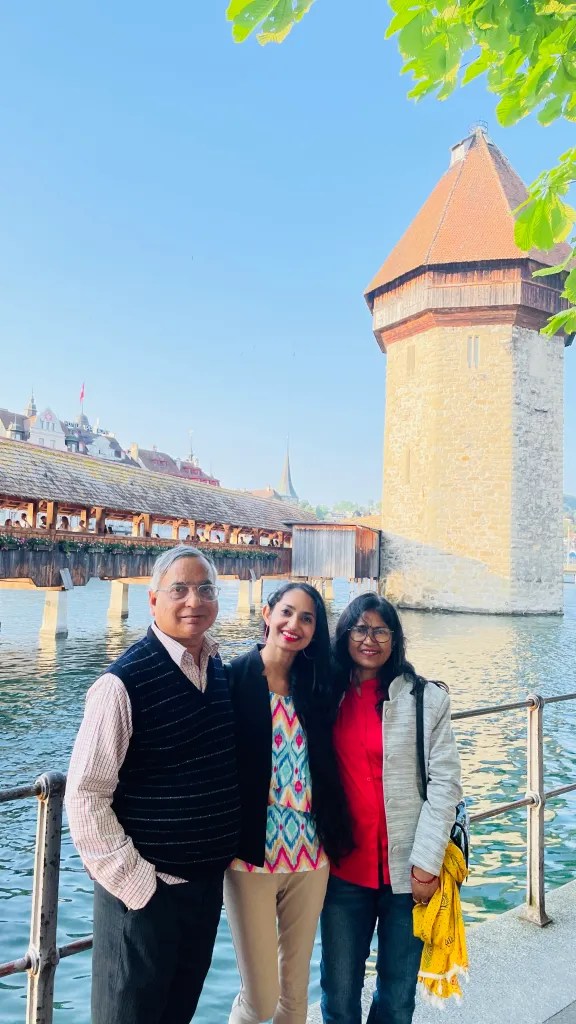
We made an impromptu decision to visit the Chapel Bridge, an enchanting covered wooden bridge stretching across the Reuss River. This iconic landmark dates back to the 14th century, earning it the distinction of being one of Europe’s oldest wooden bridges. Adorning the bridge are a series of exquisite triangular paintings portraying scenes from Swiss history. While not originally part of our planned itinerary for the day, we couldn’t resist the opportunity to explore the Chapel Bridge since we were close to Lucerne.




Finally, we arrived at our chosen accommodation for the trip, Churchstreet Apartments in Meiringen, which offered a spacious 2-bedroom apartment. The living room provided ample space, complete with a dining area. The well-equipped kitchen impressed us with its stocked seasonings, coffee machine, dishwasher, oven, and various cooking appliances. The apartment, overall, exuded a modern, clean, and stylish ambience, and its location was superb, making it an ideal choice for our stay.


Day 3 – 29 May 2023
Each day during the trip, we followed a familiar routine of getting ready, having breakfast, and preparing and packing our lunch for the day ahead.


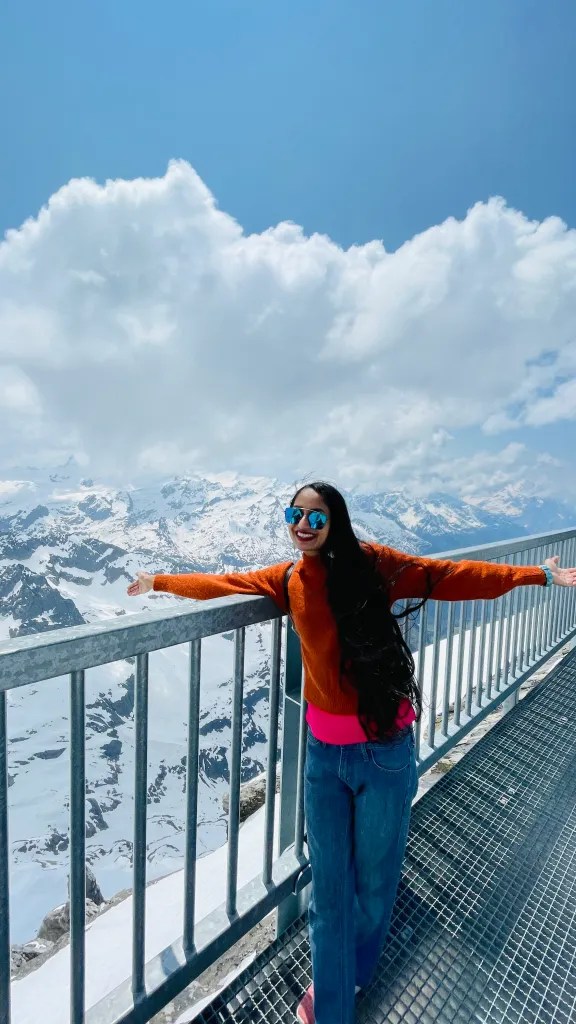
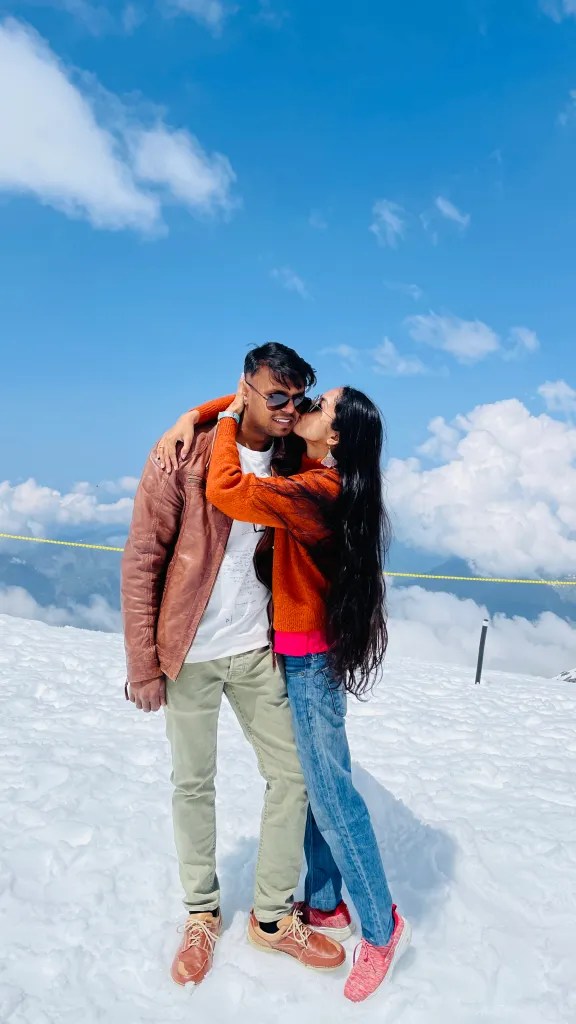
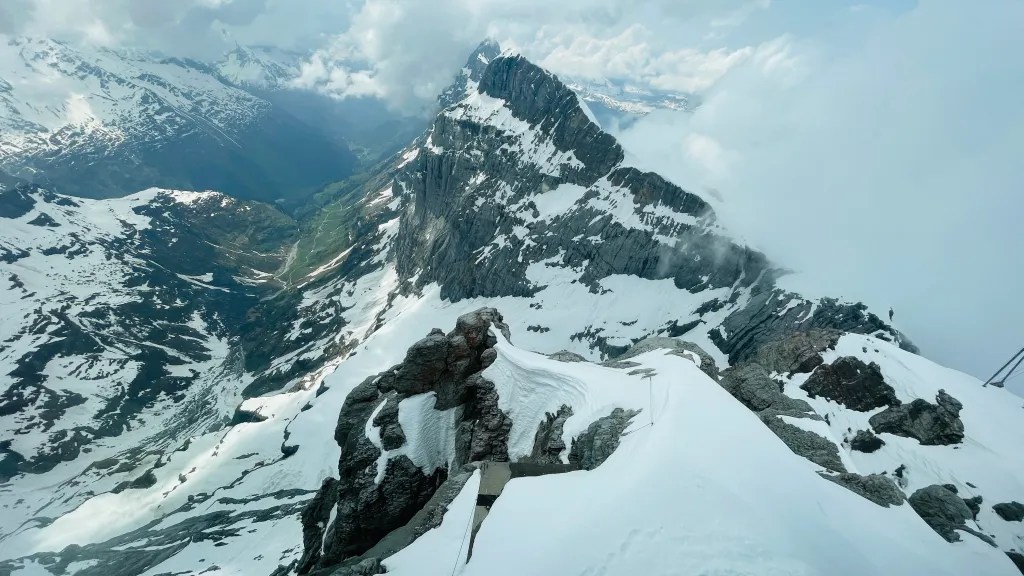
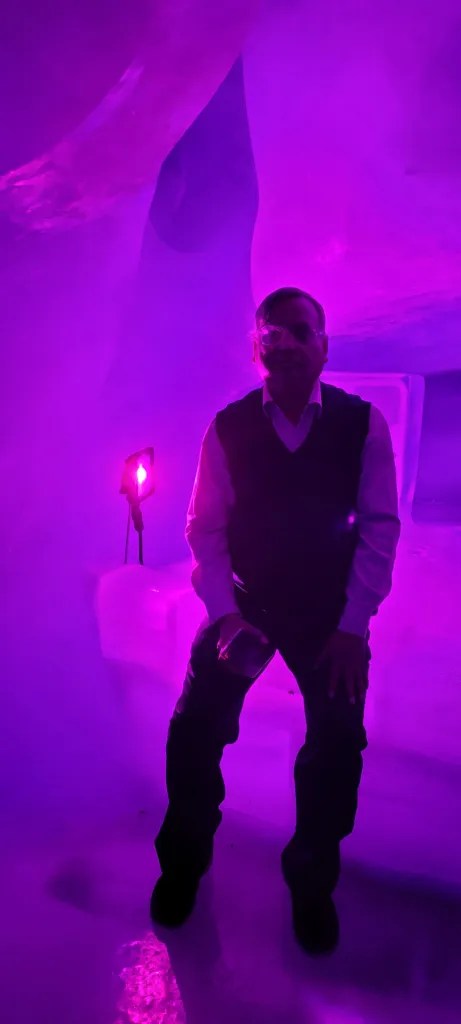
We spent the day exploring the magnificent Mount Titlis, a renowned mountain in the Swiss Alps known for its breathtaking beauty. We had deliberately chosen this destination as it offered a parallel experience to our previous trip to Jungfrau, with similar views and activities. To reach the summit, we embarked on a memorable journey, taking a series of cable cars and the rotating “Titlis Rotair” gondola. The panoramic views of the surrounding alpine landscape made the ascent an unforgettable experience. The summit, standing at an elevation of approximately 3,238 metres, holds a special place in Bollywood history, having been featured in one of the biggest hits, “Dilwale Dulhania le Jayenge.” To celebrate the movie’s success, a cutout of Shahrukh Khan and Kajol still remains at Mount Titlis, drawing a massive line of Indian visitors eager to take photos with our beloved stars. Although we had prepared for colder weather, the day turned out to be warmer than expected, with the bright sun reflecting off the snow-capped area adding to the warmth. Nevertheless, we enjoyed our time playing in the snow and taking in the awe-inspiring views. Among the day’s highlights was the Titlis Cliff Walk, Europe’s highest suspension bridge. Crossing the bridge offered unparalleled views of the glacier-filled valleys below, creating a thrilling experience. Another captivating experience was the Titlis Ice Cave, a captivating natural wonder. Inside, we found ourselves surrounded by glistening ice sculptures and beautifully adorned walls, ceilings, and floors. The cave’s ethereal ambience was enhanced by skillfully placed lighting, which illuminated the ice in mesmerising blue and white hues, creating a magical and surreal atmosphere. Comparing our experiences at both Mount Titlis and Jungfrau, we concluded that Titlis offered an even more breathtaking view.








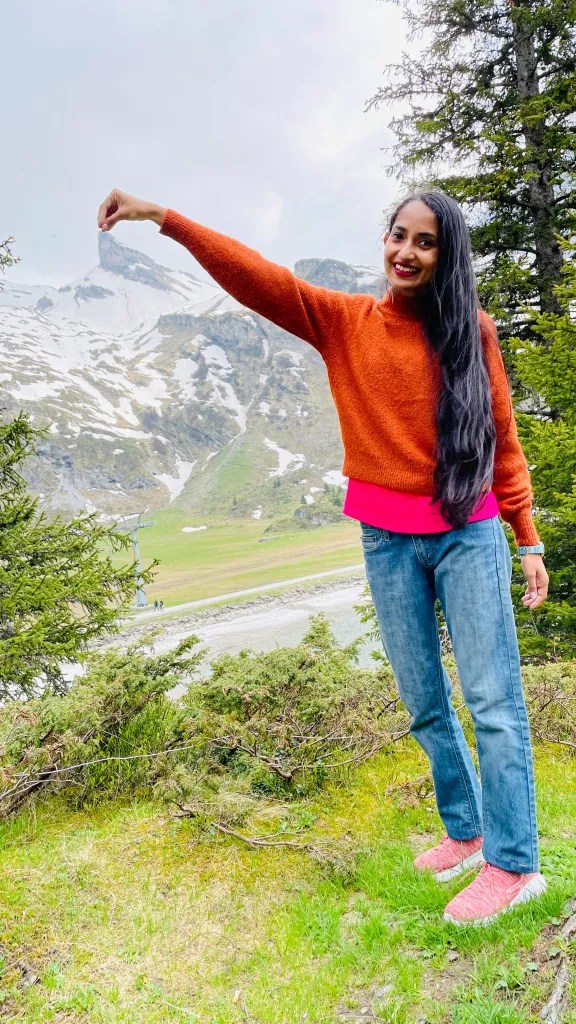
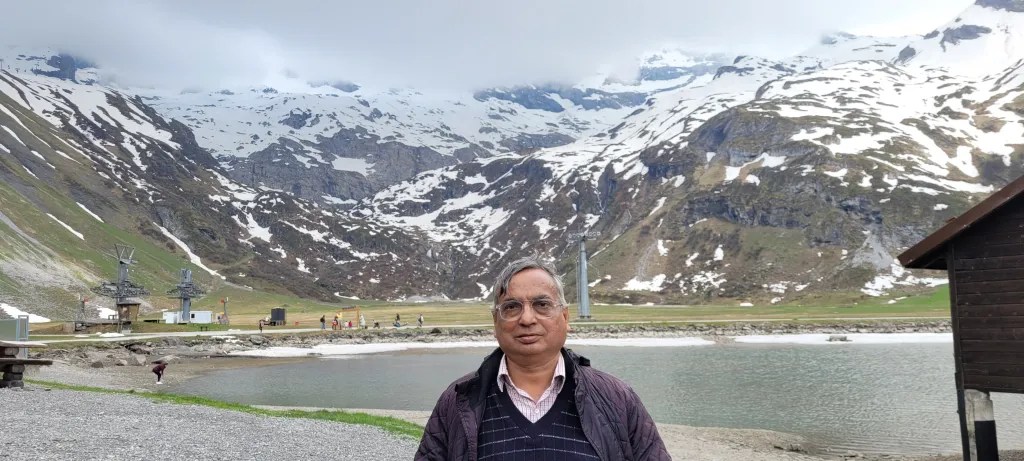
During our return from Titlis, we made a quick stop at Trübsee, a picturesque alpine lake nestled in the Engelberg region. Situated at an elevation of approximately 1,800 meters above sea level, Trübsee is surrounded by majestic mountains. The lake’s crystal-clear turquoise waters beautifully reflect the stunning scenery of snow-capped peaks and lush green meadows.




Day 4 – 30 May 2023
Our day began with our usual routine of getting ready, having breakfast, and preparing our lunch. I felt like I was on a Crash Landing On You tour that day.
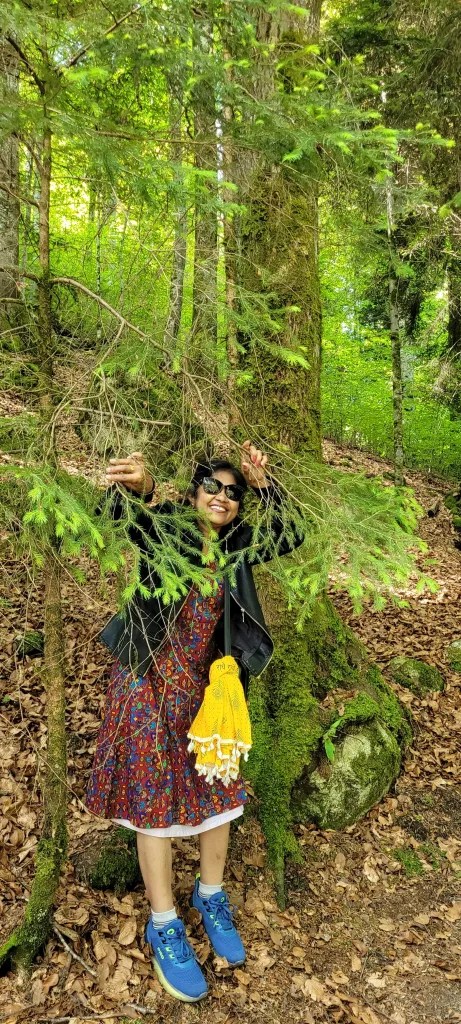
Our day began with a visit to the renowned Giessbach Waterfall, a breathtaking natural wonder known for its stunning beauty and impressive cascades. Flowing from the Giessbach stream, the water tumbles gracefully down a series of rocky steps, creating a mesmerising display. The waterfall is nestled in a lush forest setting, surrounded by tall trees, which only adds to its enchanting charm. The gentle sound of the cascading waters creates a serene and tranquil atmosphere, making it a truly peaceful spot to visit. One of the unique aspects of the Giessbach Waterfall is the historic Grandhotel Giessbach, situated adjacent to the falls. This elegant hotel, dating back to the 19th century, lends a touch of grandeur to the already picturesque scene. As a fan of the show “Crash Landing On You,” I was filled with excitement knowing that this location was one of the spots where some scenes from the show were filmed. We decided to explore one of the walking trails that offered different vantage points of the waterfall. As we continued our ascent, we came upon a fascinating section of the trail that allowed us to walk behind the cascading water. It reminded us of a similar experience we had with a waterfall in Iceland, evoking fond memories of our travels. The Giessbach Waterfall Trail proved to be a truly memorable adventure, blending the beauty of nature with a touch of history and cinematic allure.




Afterwards, we proceeded to Iseltwald, a delightful village situated on the serene shores of Lake Brienz. The village’s charming Swiss chalet-style architecture enhanced its picturesque allure. As we strolled along its narrow streets, we were greeted by beautifully adorned wooden houses, vibrant flowers, and the majestic backdrop of the Swiss Alps. Iseltwald’s lakeside setting was one of its main attractions. The crystal-clear waters of Lake Brienz reflected the surrounding mountains, creating a mesmerising and tranquil atmosphere. We took our time to enjoy leisurely walks along the lakeshore, immersing ourselves in the peaceful ambience and soaking in the breathtaking vistas. As a fan of “Crash Landing On You,” I was excited to discover that one of the show’s most iconic scenes was shot in Iseltwald. The scene featured Ri Jeong-Hyeok playing the piano at the landing stage on the lake’s shore, while Yoon Se-Ri contemplated her life on a passing ship. The melody played by the hero later helped them remember their encounter in Switzerland. The landing stage from the scene was still there, and although there were additional fees for pictures, there was a significant line of eager fans. While I decided not to pay and wait, I managed to capture pictures of the stage from different angles and even captured images of passing ships, adding to my fan moment.


Our next destination was Blausee Nature Park, an enchanting and tranquil nature reserve situated in Switzerland’s Kander Valley. We were drawn to this destination because we had previously visited it and fell in love with its charm. The park is characterised by its unspoiled lake, dense forests, and captivating scenery. The highlight of Blausee Park is the enchanting Blausee, also known as the Blue Lake, renowned for its remarkably clear and vibrant blue waters. The stunning colour is a result of the water’s purity and the unique minerals found in the lakebed. Its pristine clarity allows us to peer all the way to the lake’s bottom, creating a truly magical ambience. Boating on the glass-bottom boat over the lake was a delightful and fun experience. Within the boundaries of Blausee Park, we found well-marked walking trails that encircled the lake and led us through the lush surrounding forest. As Rishi was tired from driving, and Papa’s back was bothering him, it was just Mummy and me who ventured on these paths, relishing the opportunity to explore the natural beauty of the area and breathe in the refreshing mountain air. While we followed a familiar route from our previous visit, we were hoping to encounter alpacas again, but unfortunately, they were not present this time. Additionally, I missed a turn that would have taken us to the canyon route, but we eventually caught up with it as we were leaving, allowing all of us to experience it together. It turned out to be an unexpected adventure that added more excitement to our day at Blausee Nature Park.


On our return journey, we spontaneously made a stop at a place we had visited on a previous trip. It was nestled in the heart of Frutigen village and offered a breathtaking view, just like we remembered. However, this time around, the grass was overgrown and hadn’t been mowed, making it a bit challenging to find a suitable spot to sit. Nonetheless, after a little climbing, we discovered a perfect spot and decided to have a delightful impromptu picnic with wine and snacks.


After reaching our hotel in Meiringen, we decided to wander around the block before heading inside.


Day 5 – 31 May 2023
As it was our final day in Switzerland, we embraced spontaneity and made impromptu plans since the scheduled part of our trip had come to an end. We selected some places from our bucket list and explored a few other recommended spots as well.
We drove to Interlaken, and our first destination was Hohematte Park, a delightful and expansive green space in the heart of the city. The park is known for its vast open meadows, providing us with breathtaking views of the surrounding mountains, including the iconic Eiger, Mönch, and Jungfrau peaks. The paragliding landings at Hohematte Park were a thrilling and graceful sight to witness. The paragliders descended with precision, gently landing on the soft grass. As spectators, we cheered and applauded, celebrating their successful flights. We were fortunate to witness a series of landings during our visit, and we enjoyed capturing the moments through pictures and videos.


Next, we proceeded to the Statue of Yash Chopra, a monument installed by the Swiss government to honour the acclaimed Bollywood director. Yash Chopra had a significant association with Switzerland, as he filmed memorable scenes of the movie “Dilwale Dulhania Le Jayenge” in the breathtaking Swiss landscapes. The statue stands as a tribute to his efforts to showcase Switzerland’s beauty to Indian audiences and strengthen the connection between the two nations.


We then strolled to Unterseen, a delightful Swiss town situated near Interlaken. It is renowned for its traditional Swiss architecture, picturesque streets, and tranquil atmosphere. However, upon reaching the town, we found it to be less captivating than we had anticipated. As a result, we made the decision to depart from Interlaken after shopping for souvenirs.


We embarked on a drive to Staubbach Waterfall, a magnificent natural wonder near the village of Lauterbrunnen. The name “Staubbach” translates to “dust stream” in English, owing to the fine mist formed as the water cascades down the rock face. Originating from the Eiger and fed by melting snow and glacial water, the waterfall exhibits varying flow rates throughout the year, making it a seasonal marvel. We stood at the designated viewing area at the base, which offered us a fantastic vantage point. During our visit to Mürren last year, we encountered this waterfall, but it wasn’t as impressive as the water flow was minimal, barely resembling a waterfall. However, this time, the water flowed with full force, leaving us mesmerised by its beauty. Staubbach Waterfall stands tall at approximately 297 metres, ranking among Europe’s highest free-falling waterfalls. The sight of water plunging down the steep cliff was truly breathtaking. We also enjoyed our lunch at the waterfall viewpoint.


Our next destination was Reichenbachfall, a breathtaking waterfall located near Meiringen. Descending from the Aare River, it plunges down a steep cliff, boasting a total height of approximately 250 metres. The link between Reichenbachfall and Sir Arthur Conan Doyle’s Sherlock Holmes narrative, “The Final Problem,” adds to its allure. In this tale, Sherlock Holmes ostensibly meets his end by plummeting down the Reichenbach Falls while grappling with his arch-nemesis, Professor Moriarty. To reach the Reichenbachfall, we opted for a memorable journey on the Reichenbach Falls Funicular Railway. As we ascended, the train provided stunning views of the surrounding landscape, making the experience even more enchanting. Living in Meiringen came with the perk of discounted train tickets for us. The funicular railway operates on a single track and uses a cable system for its ascent. The well-designed train cars allowed us uninterrupted views of the picturesque scenery throughout the short yet captivating journey. Upon arriving at the upper station, we embarked on a hike to one of the viewpoints, offering us awe-inspiring sights of the magnificent Reichenbach Falls. From the viewing platforms, the waterfall’s cascades and sheer drop created a mesmerising sight.


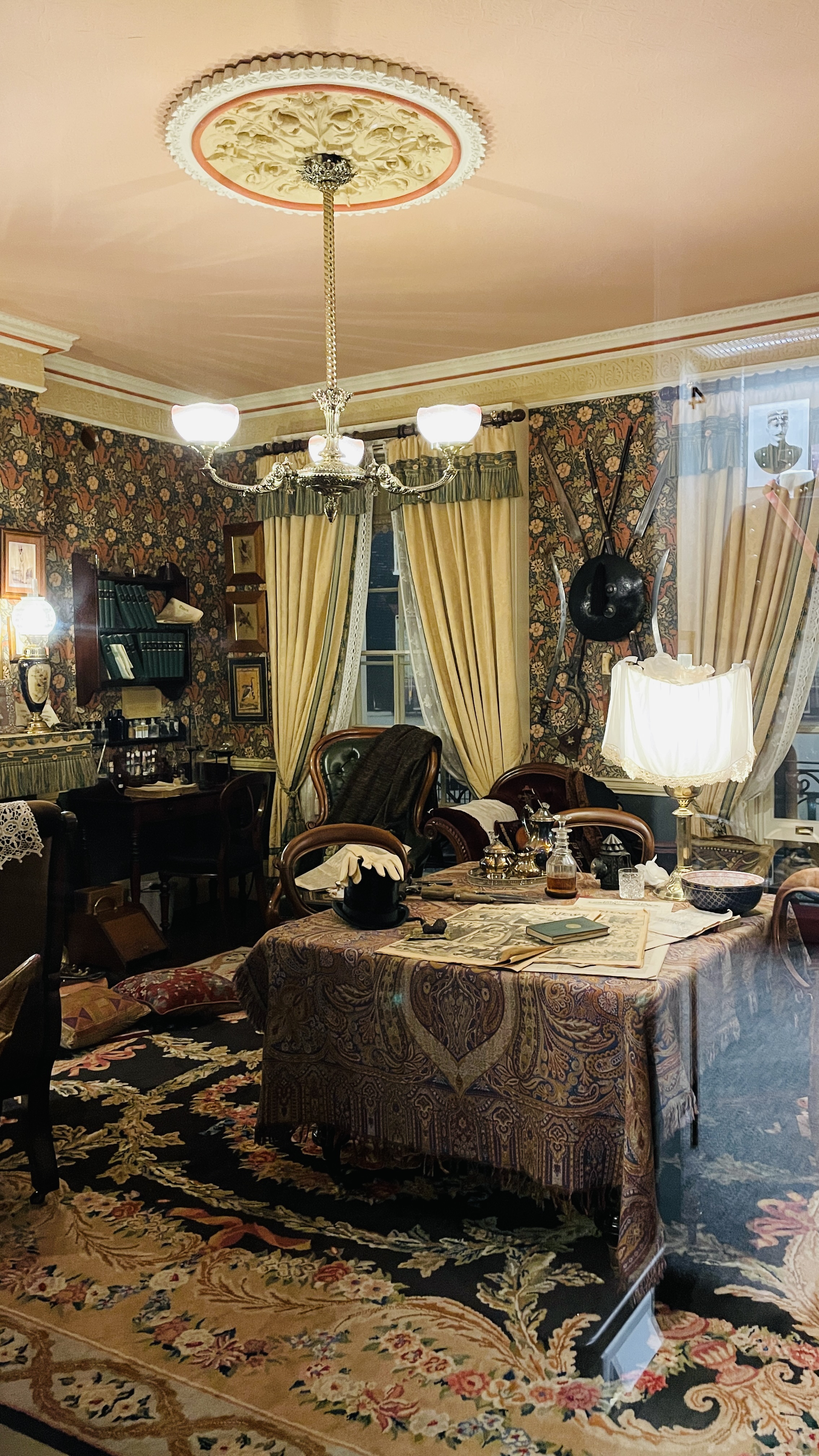
While staying in Meiringen, we couldn’t pass up the opportunity to visit the Sherlock Holmes Museum, a captivating tribute to the legendary fictional detective created by Sir Arthur Conan Doyle. Located just around the block from our apartment, we were fortunate to have a discount coupon for the museum. Although we arrived a bit late, the kind lady at the counter initially suggested visiting the next day. However, when we explained that we would be leaving in the morning, she graciously kept the museum open for us. Housed within the former English Church, the museum exudes an authentic atmosphere that instantly transported us back in time to the era of Sherlock Holmes. Inside, we were immersed in carefully curated displays and artefacts, offering a glimpse into the world of the famous detective. The museum’s collection showcased items related to Sherlock Holmes, including original manuscripts, vintage editions of Conan Doyle’s works, and an array of fascinating memorabilia. Among the highlights were the meticulously recreated scenes from Sherlock Holmes stories. It was like stepping into the very pages of the books that have captivated readers and viewers for generations. As a devoted fan of Sherlock Holmes, the experience was truly extraordinary, especially seeing the manuscripts and the faithfully recreated living room from the books. The museum provided an unforgettable journey into the captivating world of the iconic detective and left us with cherished memories of our time in Meiringen.




As a final activity, we opted for an evening stroll to discover the enchanting town of Meiringen. Nestled in the scenic Hasli Valley, the town is embraced by breathtaking alpine landscapes and majestic mountain peaks. Its traditional Swiss chalet-style architecture enhances its warm and welcoming appeal. Meiringen holds significance for its natural splendour, historical importance, and intriguing links to literature and popular culture. While wandering through the town, we couldn’t miss the delightful nods to Sherlock Holmes, honouring the literary connection between Meiringen and the famous detective. During our leisurely walk, we stumbled upon a hidden gem—a lesser-known yet beautiful waterfall located just around the block from our apartment. It proved to be a delightful discovery, and we also found a lovely park nearby, adding to the town’s allure.


Day 6 -1 June 2023
After saying our goodbyes to our apartment and Switzerland, we proceeded on our journey towards Germany. Along the way, we made a stop at Baden-Baden, a picturesque spa town located in the southwest of Germany, nestled at the foothills of the Black Forest. This charming town is famous for its natural thermal baths, breathtaking landscapes, and rich cultural heritage. In fact, the name “Baden-Baden” itself translates to “Baths-Baths,” underscoring its historical connection to the healing thermal waters. Due to our limited time in the city, we decided not to visit any of the renowned spas that the city is famous for. Instead, we embarked on a leisurely exploration of the town’s charming streets and came across beautiful buildings, lush parks, and picturesque squares.


We strolled over to Lichtentaler Allee Park, a picturesque green space nestled in the heart of Baden-Baden. The park runs along the banks of the Oos River, offering a serene pathway for us to leisurely explore amidst lush greenery and vibrant blooms. The park’s name is derived from the Linden trees (known as “Lichtentaler Linden” in German) that grace the avenue, providing refreshing shade and a delightful fragrance during the warmer months. We found a peaceful spot near the stream and savoured our lunch under the shelter of a tree. Throughout the park, we encountered charming bridges, statues, and ponds that added to the park’s enchanting atmosphere.


We decided to visit the Roman Bath, a captivating historical site that offers a glimpse into the city’s ancient past. Situated in the heart of the town, it draws history enthusiasts and those intrigued by Roman culture. Also known as “Friedrichsbad,” the Roman Bath dates back over 2,000 years to the Roman era when it was constructed to harness the healing thermal waters that naturally flow in the area. Although we didn’t plan to explore the entire site, we were able to see a portion of the ruins during our visit.


Eventually, we reached Augustaplatz, a delightful square bearing the name of Augusta of Saxe-Weimar-Eisenach, a German Empress and Queen of Prussia. The square’s centrepiece is a captivating fountain adorned with intricate sculptures and encircled by beautifully landscaped flower beds, enhancing its overall charm. Adjacent to the square, we explored Stadtkirche, a historical Protestant church originally constructed in the 15th century. Its architectural style is a blend of Gothic and Baroque elements, giving it a unique and striking appearance.


At last, we arrived at our accommodation in Langscheid, the Ferienapartments am Dorfplatz, where we would be staying for the next two nights. The apartment boasted one bedroom and a fully equipped kitchen, complete with a microwave and a toaster. Since there were four of us, we booked two of these apartments for our stay, and they proved to be a perfect choice for our time in the scenic Rhine Valley.
Day 7 – 2 June 2023
We devoted the day to exploring a pair of enchanting towns located in proximity to our accommodation in Langscheid within the Rhine Valley.
We spent half our day walking around Bacharach, a captivating and historic town nestled along the picturesque banks of the Rhine River. The word Bacharach means “altar to Bacchus” (the Roman god of wine). It is considered to be the prettiest town in Germany’s UNESCO-listed Upper Middle Rhine Valley. Its charm lies in its well-preserved mediaeval architecture, making it feel like a step back in time. As we strolled through Bacharach’s cobbled streets, we encountered charming half-timbered houses adorned with colourful flower boxes, creating a vibrant contrast against the timeless backdrop.


Our initial destination within the town was the Münze, a structure whose origins trace back to the 14th century. Initially functioning as a mint responsible for coin production, the architectural design of this building mirrors the prevailing style of that time. Notable features include its robust stone walls, arched doorways, and intricate detailing. This historic building is now home to Kurpfälzische Münze, a bar and restaurant.


During our stroll, we came across Altes Haus, meaning “Old House” in English, constructed in 1368, making it potentially the most ancient building in Bacharach. Following the prevailing architectural trends of the 14th century, its foundation is crafted from stone, while the upper levels boast the hallmark half-timbered design. This building is currently occupied by a restaurant renowned for its heritage and historical ambience, despite its concise menu.


We then climbed and walked along Bacharach’s Town Walls, which were hugely rewarding. Although it is steep and rocky in parts, we were treated with some of the best views in town, across its buildings’ slate roofs and over the Rhine.


Our next stop was St. Peter’s Church, which is the biggest church in Bacharach and dominates the town’s skyline. The majority of the church’s architecture is Romanesque, but there are also evident French Gothic influences. There are some intriguing sculptures, notably a naked woman holding serpents, and some fading mediaeval murals.


Leaving the church, we embarked on a brief yet steep ascent to reach Wernerkapelle. This Gothic ruin takes the form of a cloverleaf and is crafted from reddish, finely textured sandstone. Originally the location of St. Cunibert Chapel, construction commenced on a new church here in 1294. Remarkably, it took 140 years to finalise its construction, only to face destruction in 1689 during the Palatine War of Succession involving Bacharach.


Afterwards, we took a leisurely stroll along Malerwinkel, a street affectionately known as Painters’ Corner and widely regarded as the most picturesque in Bacharach. This captivating lane is characterised by a sequence of half-timbered houses, each adorned with carefully cultivated gardens that run alongside a serene, meandering creek.


During our walk along the street, we came across a hiking trail that directed us towards Stahleck Castle. Intrigued by the idea, Rishi and I decided to embark on the hike. Initially, we made some progress, but as we encountered a route with nearly a 50% incline, we decided to give it a shot. However, after ascending a bit, we found it to be quite challenging and decided not to proceed further. As difficult as it was to climb up, it was more challenging to climb down. Eventually, after some effort, we successfully made our way back to our starting point, having managed the hike to the best of our abilities.


Following our exploration of Bacharach, we embarked on a drive to Oberwesel am Rhein, a picturesque town nestled along the banks of the River Rhine. The historical heart of the town is characterised by its meticulously preserved mediaeval ambience, featuring narrow cobblestone streets, charming squares, and houses adorned with half-timbered architecture. The town’s allure is further accentuated by the soaring spires of churches and castles that grace the skyline, contributing to its undying charm.


Upon parking our car, we ascended and explored the Oberwesel Stadtmauer, or the Oberwesel Town Wall. This remarkable fortification stands as the most impeccably maintained wall in the Middle Rhine region. Construction of these walls commenced in 1220, with subsequent expansions taking place until the 15th century. Remarkably, these walls have not only been carefully preserved in their mediaeval state but have also been arranged in a manner that allows visitors like us to traverse extensive portions of this historic structure. As we wandered along the walls, we were treated to panoramic views stretching across the Rhine, enhancing our experience.


After our exploration of the walls, we made our way to Martinskirche, also known as St. Martin’s Church. This church, dating back to the 14th century, stands prominently and is often referred to as the “white church.” Notably, the tower displays a distinct architectural style, setting it apart from the rest of the church’s structure. Interestingly, this tower predates the construction of St. Martin’s Church and initially served as part of the town’s defensive fortifications before eventually becoming integrated into the newly erected church. The tower stands as a prime example of Gothic defensive architecture in the Rhine Valley. As the weather was quite warm upon our arrival at the church, we found respite in the shade, taking in the scenic view of the Rhine before venturing inside. Within the church, intricately painted ceilings and a beautifully sculpted main altar greeted us.


Then, as we strolled through the quaint town, we took in its cobblestone lanes, lovely squares, and homes with half-timbered exteriors. We saw so many gorgeous rose trees full of enormous flowers that we couldn’t help but take pictures.


Our final destination within the town was the Liebfrauenkirche, often referred to as the “red church” due to its distinctive colour. The construction of this church commenced in 1308 and was ultimately consecrated in 1331, replacing an earlier church on the same site. The Liebfrauenkirche stands out for its architectural and interior attributes, deviating from the conventional Gothic style. Its exterior boasts geometric patterns instead of the customary ornate decorations, while the spacious interior features substantial pillars and a soaring nave, creating a unique visual impact. Upon entering the church, we took the time to absorb the beauty of its interiors. As we were doing so, we found ourselves in the presence of a priest who had taken a seat in front of us. This made us feel a bit self-conscious about capturing photographs, but we carried on with our plan. When we eventually decided to leave and were making our way towards the exit, the priest motioned for us to explore a smaller room housing the altar. To our astonishment, this room held a dazzling gold altar, recognised as one of Germany’s oldest Gothic shrine altars, along with mediaeval frescoes that added to its allure. Before departing, we expressed our gratitude to the priest for the unexpected opportunity to witness such treasures.


After our town exploration, we opted to enjoy our lunch by the riverside, where we had parked our car. We noticed unoccupied tables and chairs adjacent to a closed restaurant, providing us with the perfect spot for our meal.


We returned to Bacharach to visit Weingut Dr. Kauer for a wine-tasting experience. The winery is known for its focus on producing dry wines with lively acidity and a refreshing character, characteristic of the wines from the Middle Rhine Valley. The tasting involved a charge of €1 for each glass, which included a small serving of each wine. One of the owners guided us through a delightful tasting session of nine different wines. She initiated the tasting by inquiring about our wine preferences, and then she expertly led us through the tasting, considering our comments for each wine. Although we had hoped to also explore the vineyards as part of the experience, similar to what we had seen in Tuscany, this aspect was not available without prior booking. Despite that, some of the wines truly impressed our palates and the overall ambience and decor of the shop added to the winery’s charm.


We subsequently enjoyed a leisurely time at Bacharach Park, a delightful green area by the Rhine River. The abundant greenery, benches, and pathways established a calm ambience. The park provided us with a serene environment for strolls, and we appreciated the comfortable benches while admiring the river’s view. It was an ideal location to soak in the river’s charm, the historic town, and the vineyards gracing its shores.


Our next stop was Stahleck Castle, a mediaeval fortress that proudly overlooks the town of Bacharach. Constructed in the 12th century, this castle has a diverse past, having served as a residence, a fortress, and now functioning as a youth hostel. Its impressive architecture and commanding towers stand as a testament to its history. What truly captured our attention were the breathtaking vistas of the Rhine River and the charming landscapes below, a result of its strategic hilltop position.


As we were heading back to our apartment, Rishi noticed a random spot that offered a stunning view of the river and Pfalzgrafenstein Castle. This historic fortress is situated in the middle of the Rhine River and dates back to the early 14th century. Perched on a small rocky island, the castle was strategically positioned to regulate river traffic and levy tolls on passing ships. We spent some time at the viewpoint before making our way back.


Day 8 – 3 June 2023
On the last day of our journey back home, we made a stop in Cologne along the way.
We strolled over to the Hohenzollern Bridge, a prominent structure spanning the Rhine River that serves as both a railway and pedestrian crossing. It’s famous for its unique design and the array of love locks adorning its railings. Since this marked my third visit to Cologne, I came prepared with my own love lock to add to the collection. This fulfilled a long-standing desire of mine, inspired by scenes from numerous movies, and I finally got to live out that romantic fantasy.


Next, we headed to the Cologne Cathedral, a truly remarkable and iconic example of Gothic architecture. This cathedral ranks among the largest in Europe and is renowned for its breathtaking design, intricate embellishments, and striking spires. We were so captivated by the cathedral during our previous visits that we were eager to share its magnificence with my parents as well.


Ultimately, we settled by the riverside, relishing the view and savouring our packed lunch, creating a small picnic before we continued on our journey.
As our journey through Switzerland and Germany drew to a close, we couldn’t help but feel a profound sense of gratitude for the incredible experiences and memories we had gathered along the way.

Well written. Even I relived our tour to Switzerland. Love you and your descriptions.
Sunita